
All work
Independent Product Design Ongoing 2026

Formi: Patient App

AI-guided recovery, patient mobile app

MobileProduct DesignHealthtechReact Native
Formi: Patient App — patient mobile app
Patient app (iOS & Android)
Role
Product Designer: UX, UI, and design system (shared with the dashboard)
Platform
Native mobile, iOS & Android
Scope
30 screens
Timeline
Ongoing · 2026, same engagement as the dashboard

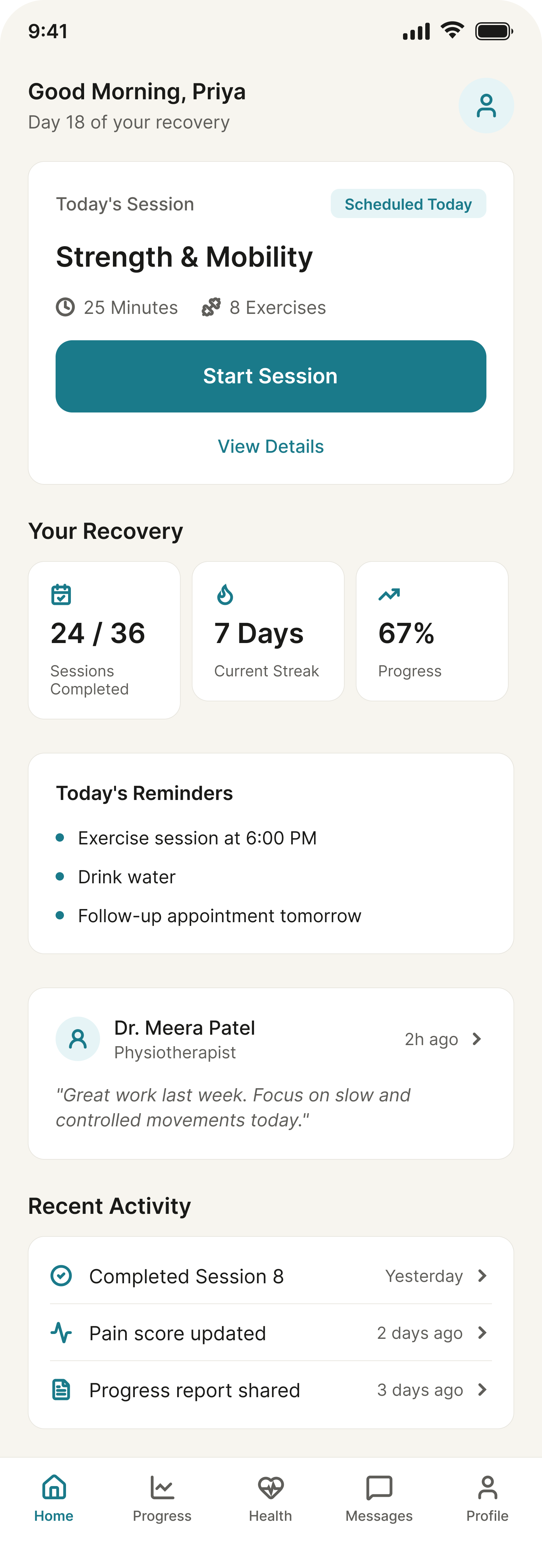
The other half of Formi. Where the therapist dashboard is built for a ten-minute daily review, the patient app is built for the moment someone is alone, mid-exercise, and needs to know whether they’re doing it right.

At a glance

30
Screens in the patient app
1
Design system shared with the dashboard
2
Native platforms, iOS & Android
ContentsOverview
  1. 01Overview
  2. 02Problem
  3. 03Who it’s for
  4. 04UI Design
  5. 05Key Decision
  6. 06Outcome & Reflection

The half of the platform patients actually live in

The therapist dashboard exists to give clinicians visibility between appointments. The patient app is the other end of that same connection: where the recovery actually happens: doing the exercises, getting real-time form feedback, watching pain and progress move week to week.

This page picks up from the dashboard case study rather than repeating it, the platform research and the business model live there. What follows is the same product seen from the other end.

Recovery is something you do alone, badly, and can’t tell

A patient leaves the clinic with a sheet of exercises and no way to know whether they’re doing any of them correctly.

Physiotherapy has a completion problem. Most of a programme happens at home, unsupervised, in the days between appointments, and that is exactly where it falls apart. Form degrades with nobody watching. Pain easing gets mistaken for the injury being healed, so people stop early. Nothing and nobody registers that they stopped until the next visit, if there is one.

The people doing this are not the people the fitness-app category is designed for. They’re 30–65, across urban and semi-urban India, with low-to-moderate digital literacy: often exercising one-handed while lying on the floor or steadying a limb, on a mid-range Android, on patchy signal. Every assumption a polished consumer app makes about attention, dexterity and connectivity is wrong here.

50–65%
of patients never finish their prescribed home programme
35%
fully adhere to a home exercise programme
Sprypt, 2025

And the patient is often not alone. A family member or guardian is frequently the one holding the phone, positioning the camera, or watching to catch the moment something looks wrong, carrying real responsibility for the recovery while the product speaks only to the patient.

Two people in the room, not one

A session at home is rarely a solo activity. There is the person recovering, and very often a second person holding the phone, setting up the camera, or just watching to make sure nothing goes wrong. The app has to work for both without ever confusing whose turn it is to act.

Mary Cooper, 56

Post-operative recovery patient

I do the exercises, but I never know if I’m doing them properly until my next appointment.

Goals
  • Recover fully and safely without reinjury
  • Get feedback on form while exercising, not a week later
  • Track pain trends and see progress accumulate
Frustrations
  • Zero feedback between appointments
  • Uncertain about form when alone
  • Loses track of progress over time
Rajesh Shah, 58

Family caregiver, helps his wife through her daily sessions at home
I want to help, but I genuinely don’t know if I’m helping or getting in the way.
Goals
  • Know what he’s actually meant to do during a session
  • Be sure she isn’t pushing too hard and undoing the surgery
  • Know when something is worth calling the physiotherapist about
Frustrations
  • Every instruction is written for the patient; none of it is addressed to him
  • Can’t tell ordinary post-exercise soreness from the kind that means stop
  • Only finds out something was being done wrong at the next appointment

The full persona work sits on the dashboard case study: this is here so the page stands on its own for anyone landing on it directly.

What the app does

01 / 04

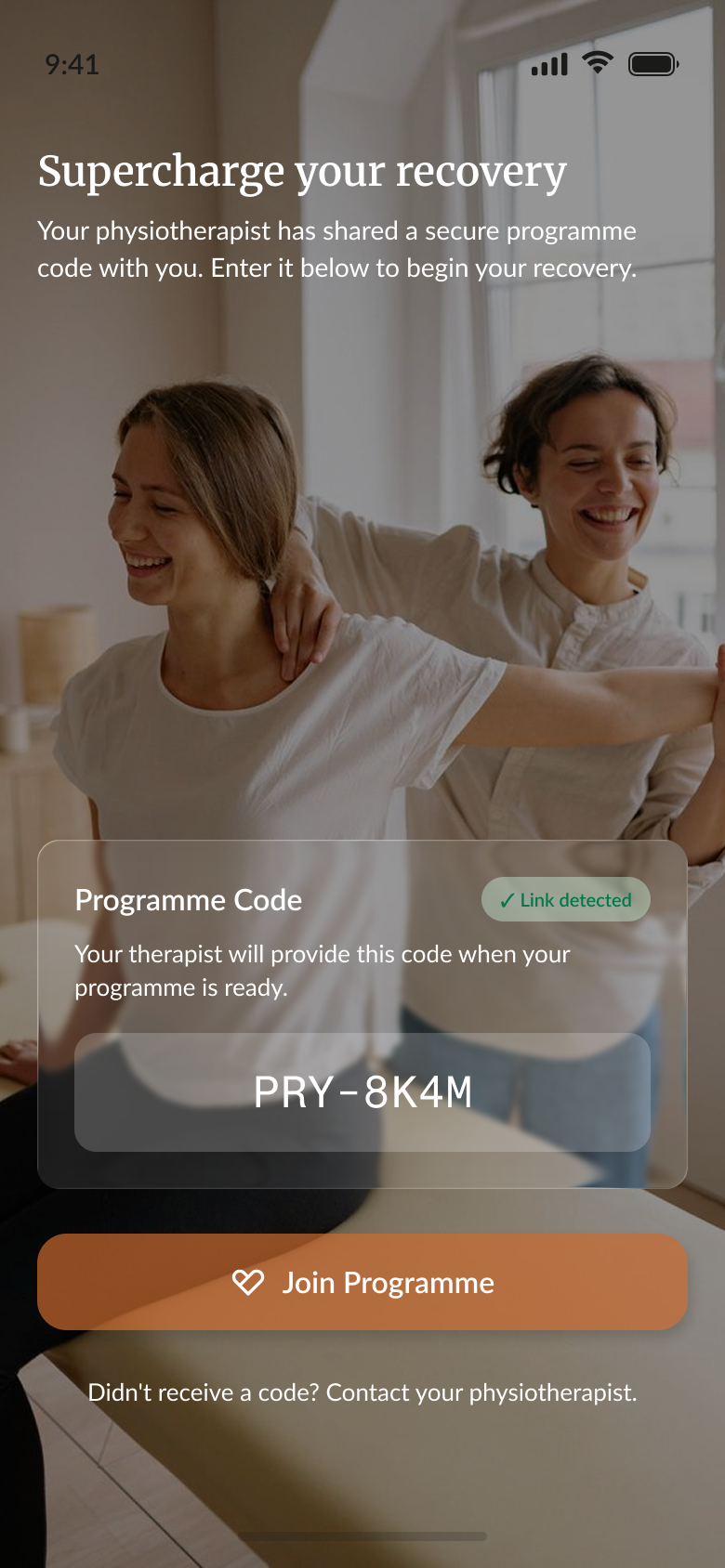
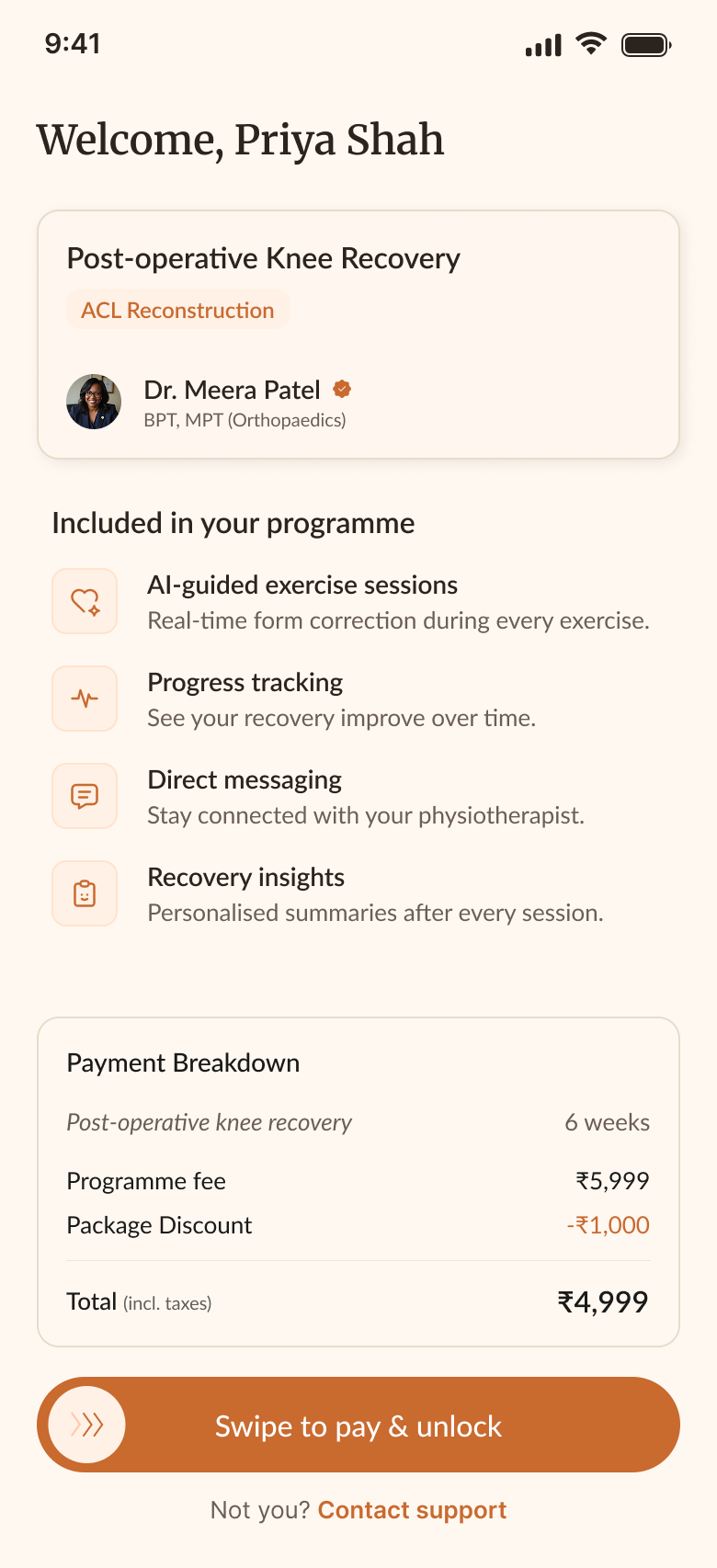
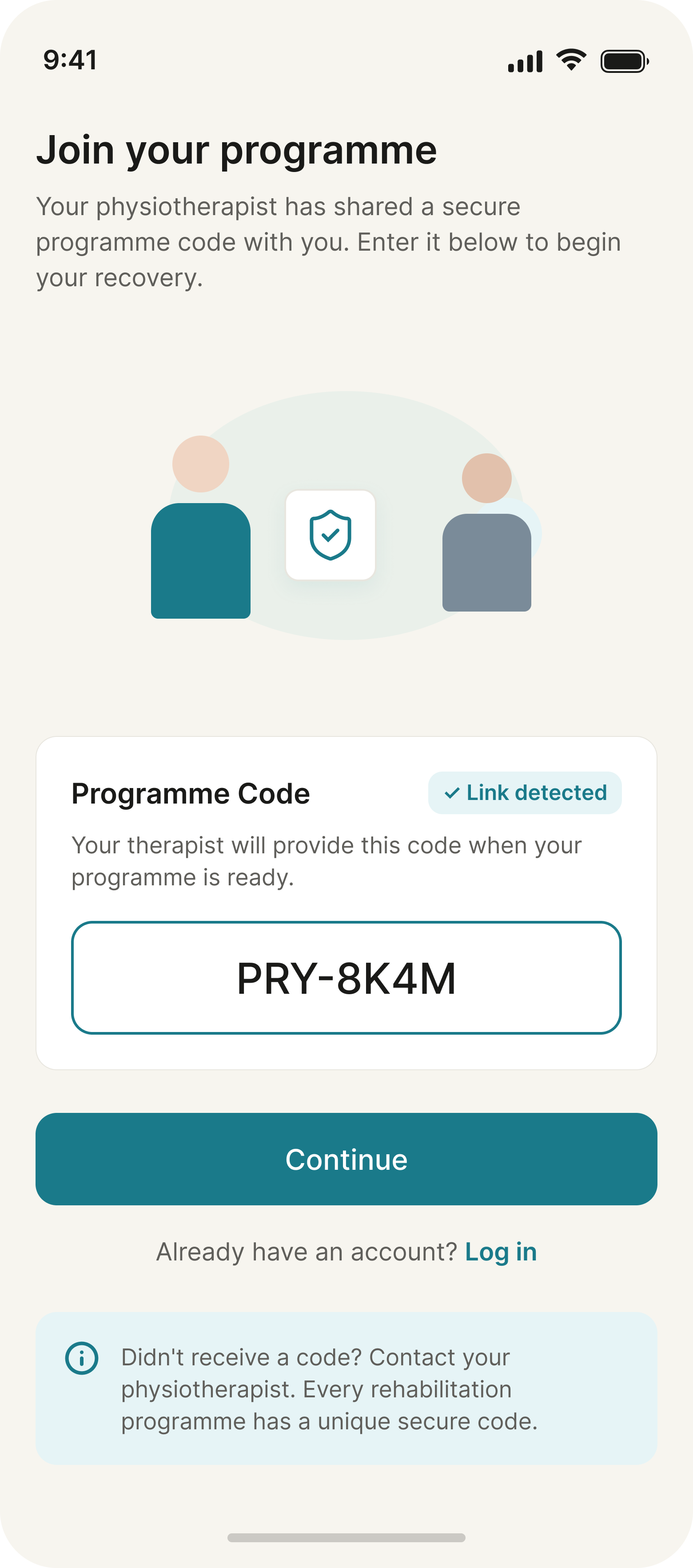
Onboarding, from a link the physiotherapist sends

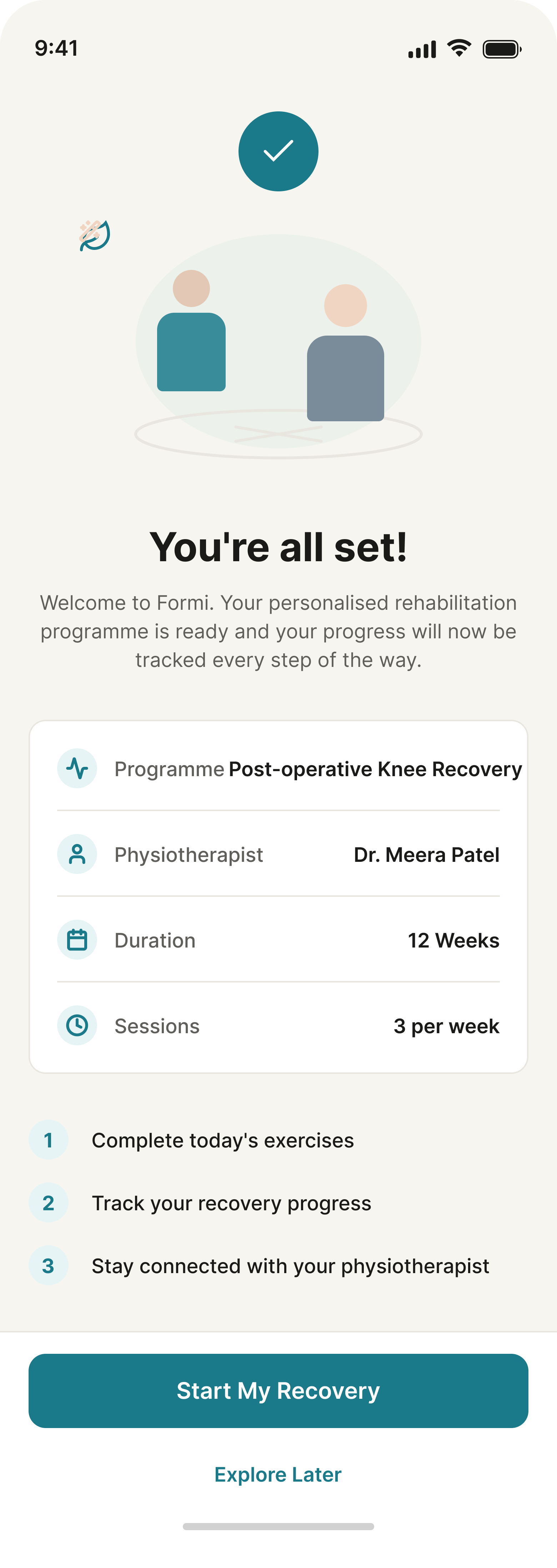
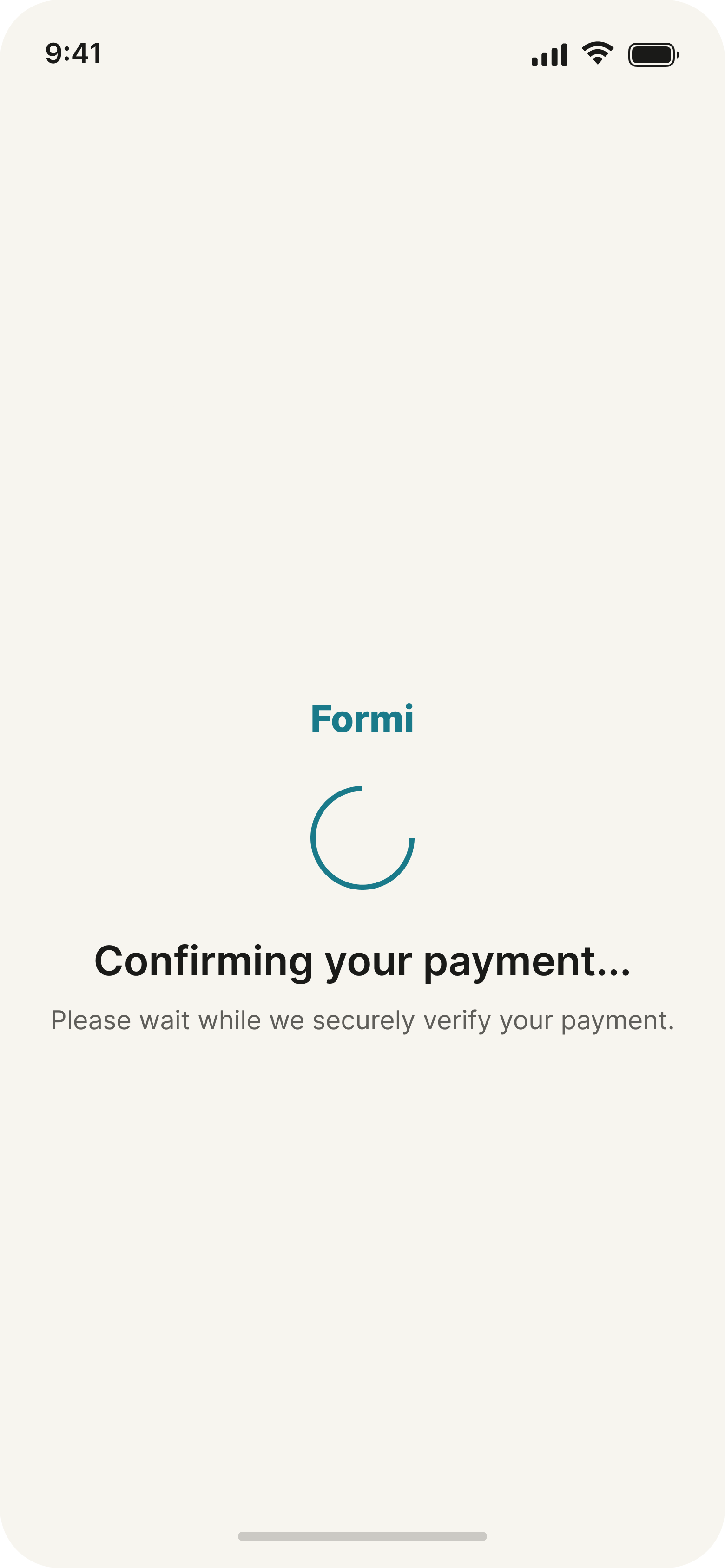
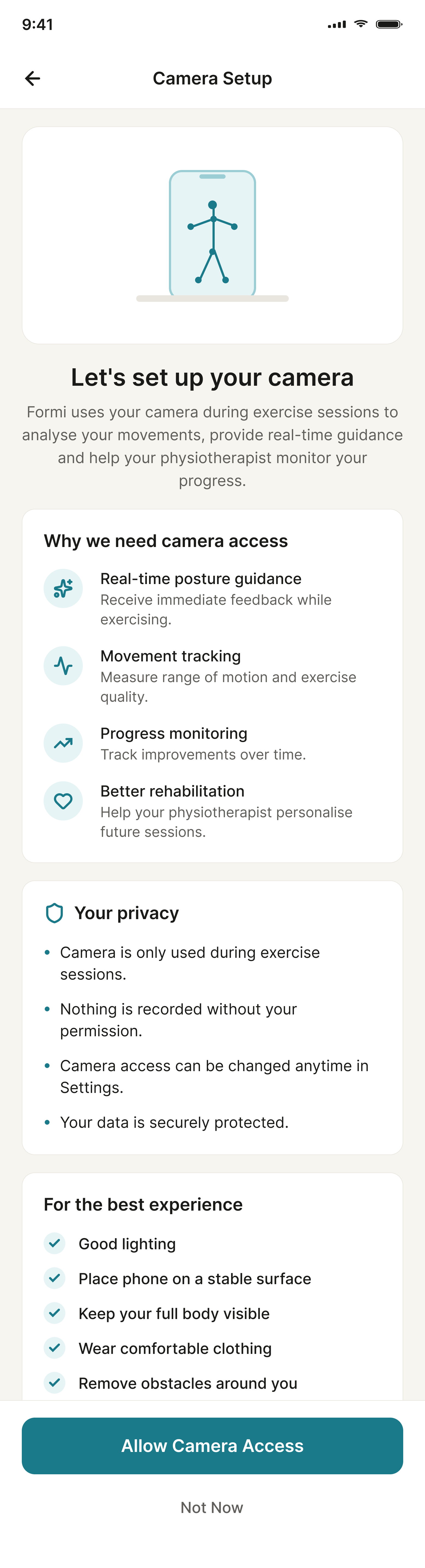
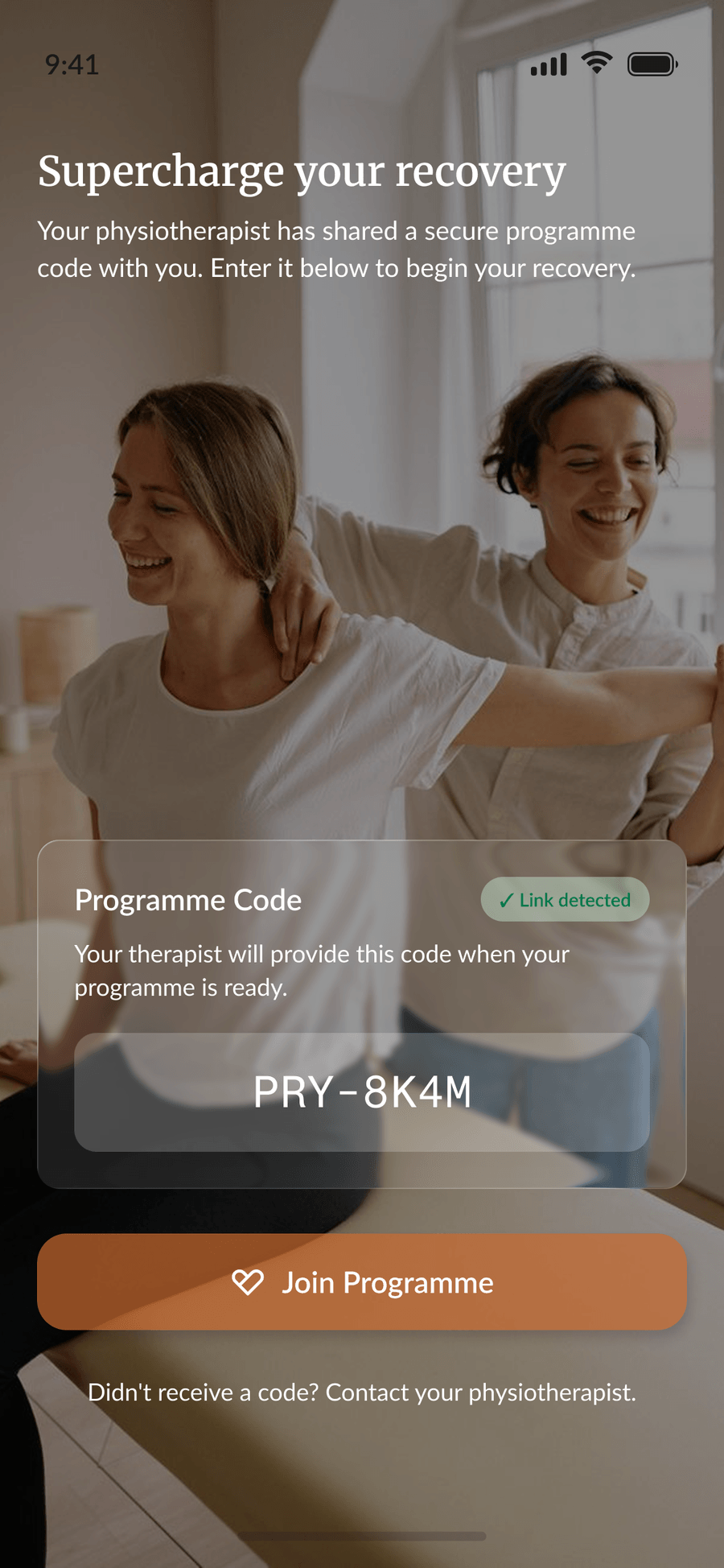
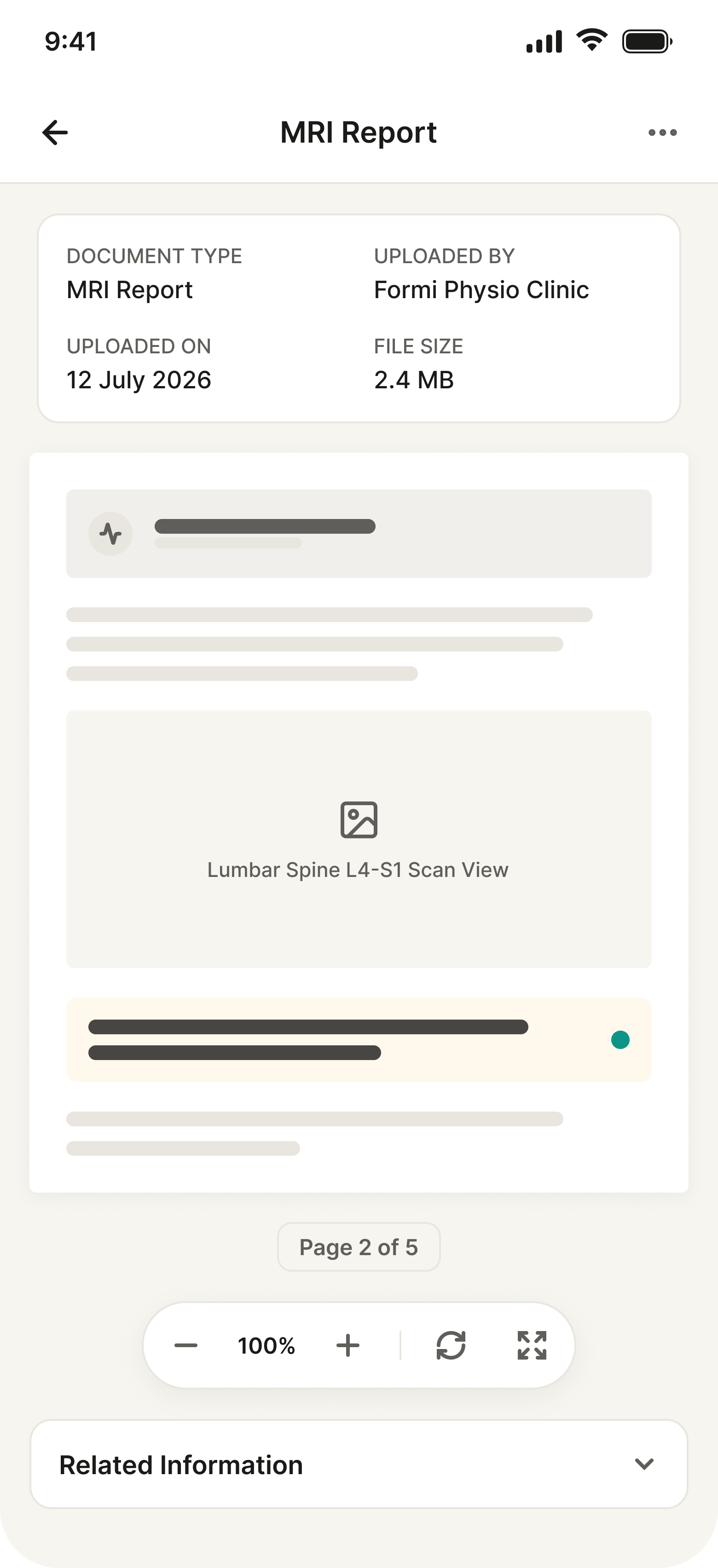
A patient arrives through a link their physiotherapist gave them, and sees a preview of the programme before committing to anything: condition, duration, what’s included.

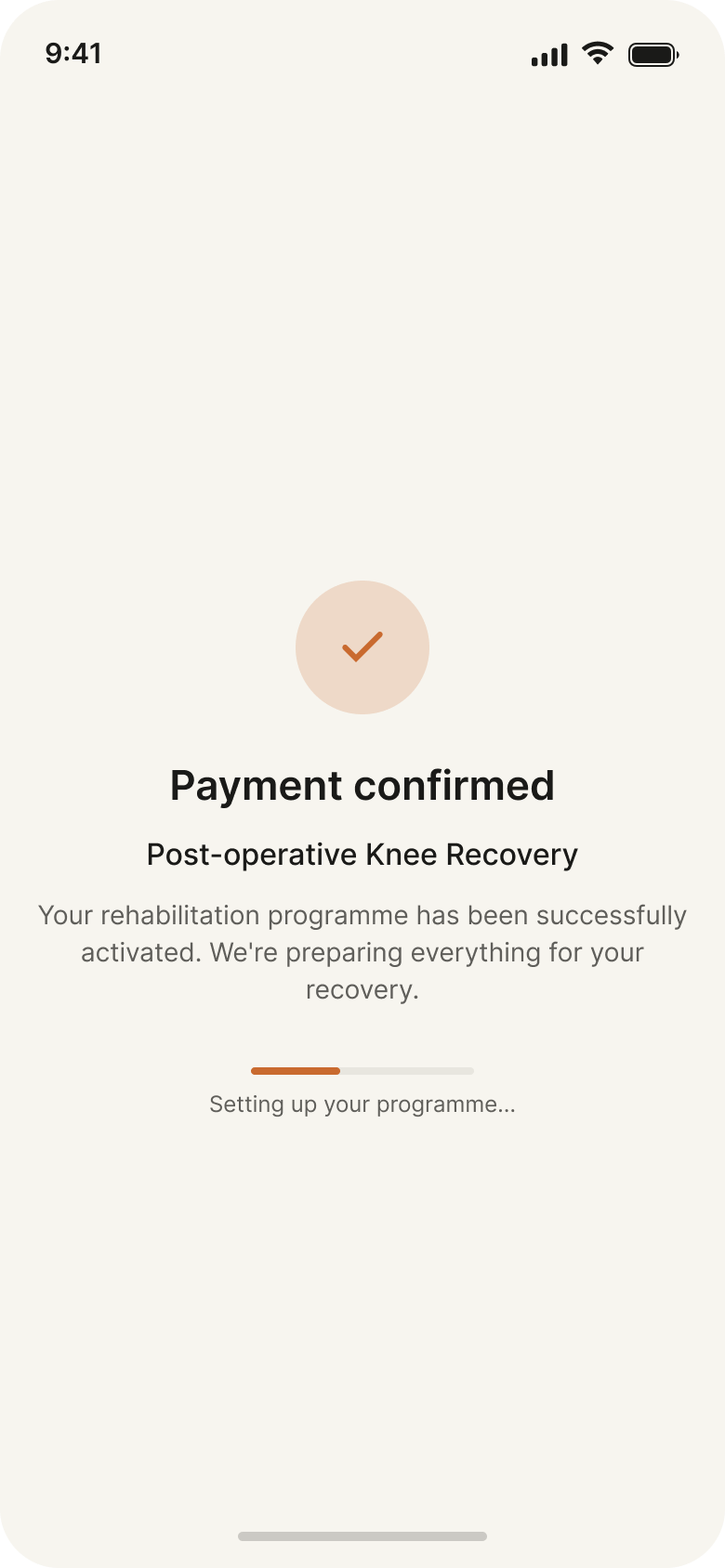
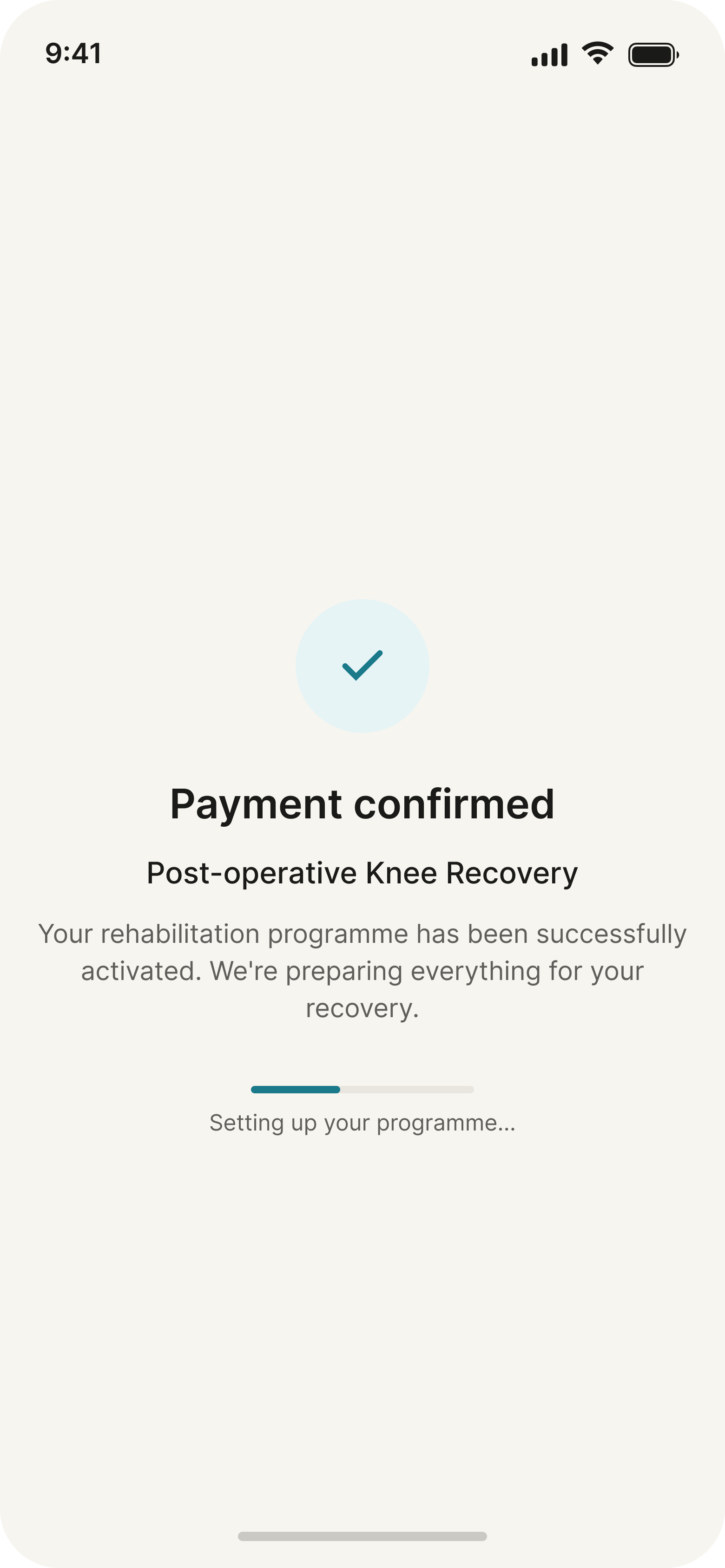
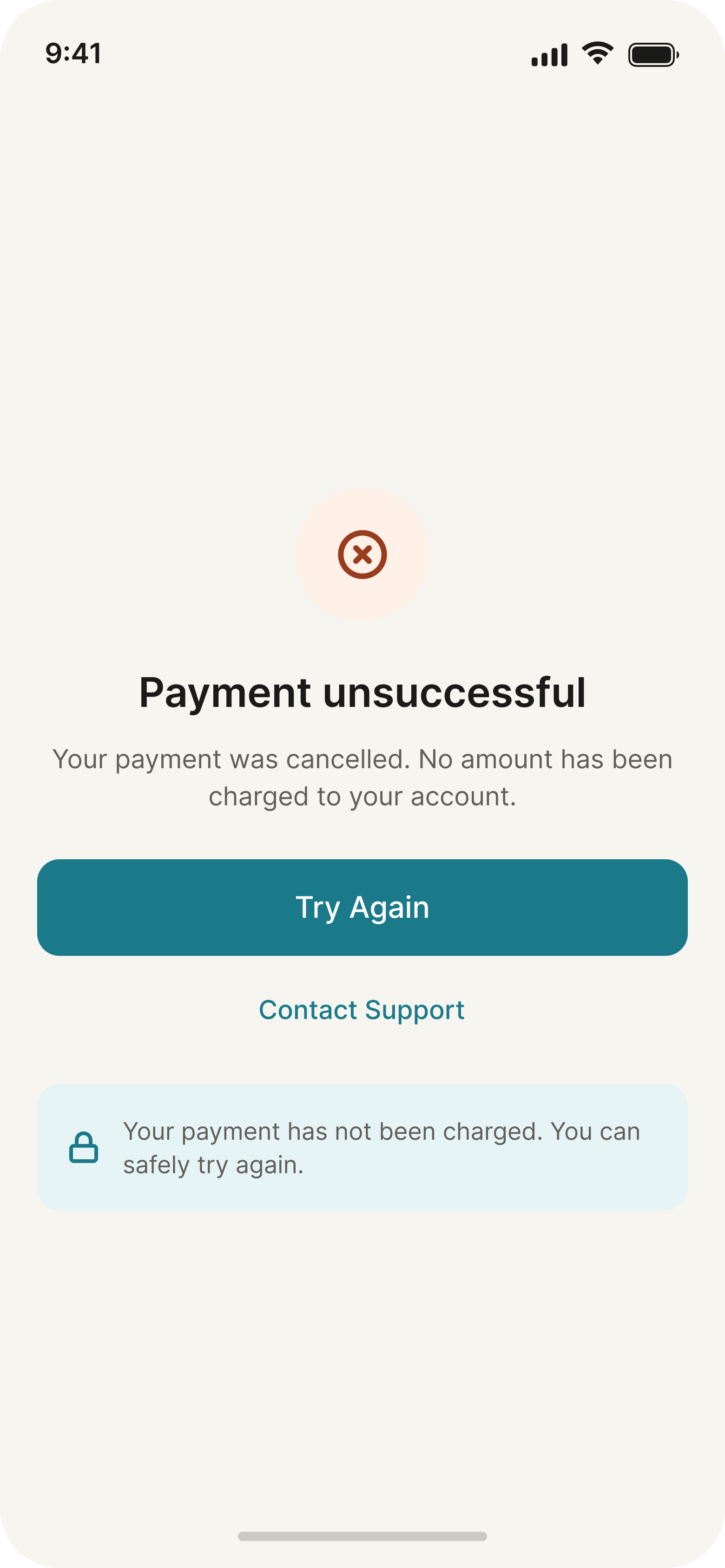
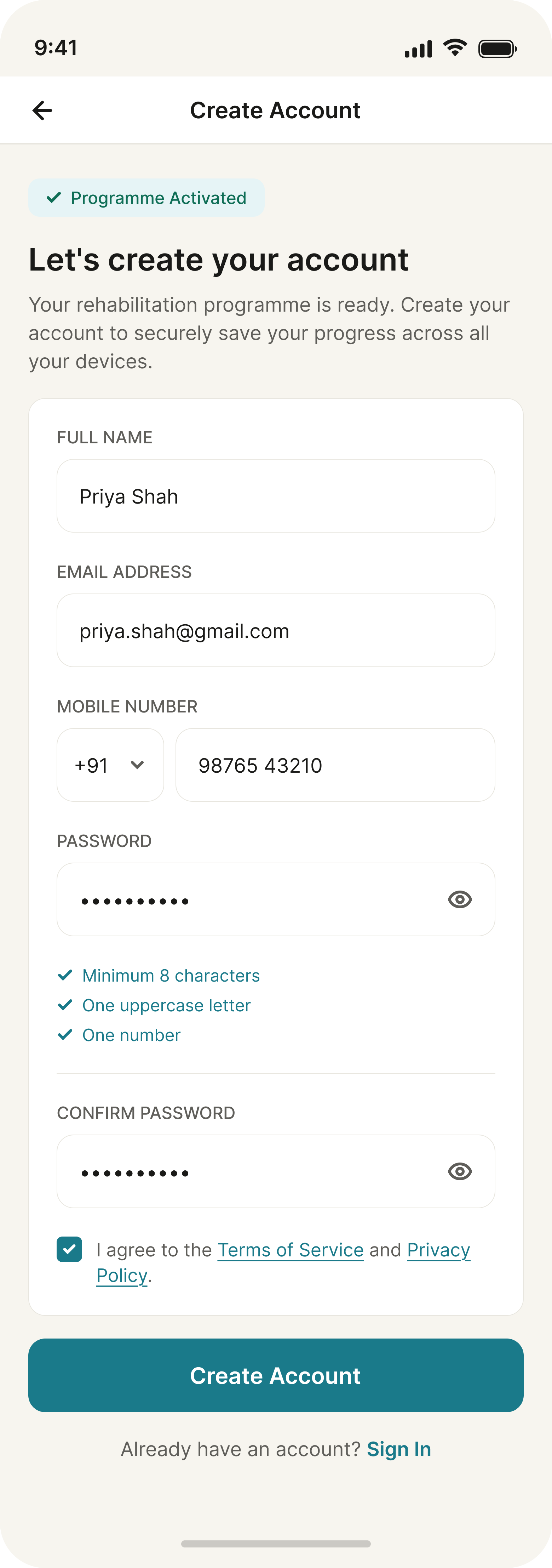
Payment sits behind that preview as the gate: the programme activates the moment payment clears. Nobody is asked to create an account before they know what they’re buying.

Onboarding, from a link the physiotherapist sends

Onboarding, from a link the physiotherapist sends

A patient arrives through a link their physiotherapist gave them, and sees a preview of the programme before committing to anything: condition, duration, what’s included.

Payment sits behind that preview as the gate: the programme activates the moment payment clears. Nobody is asked to create an account before they know what they’re buying.

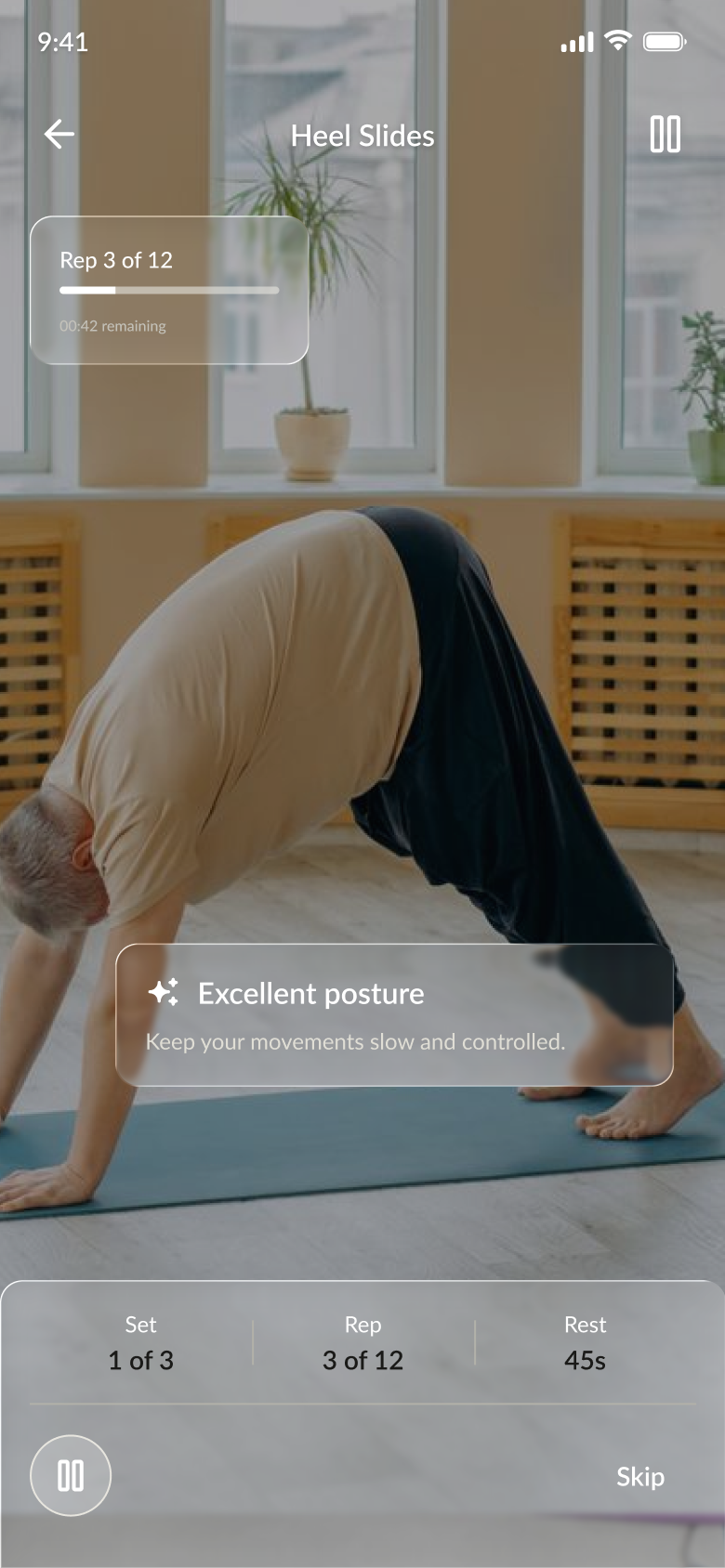
AI pose-tracking, with voice and visual assistance

AI pose-tracking, with voice and visual assistance

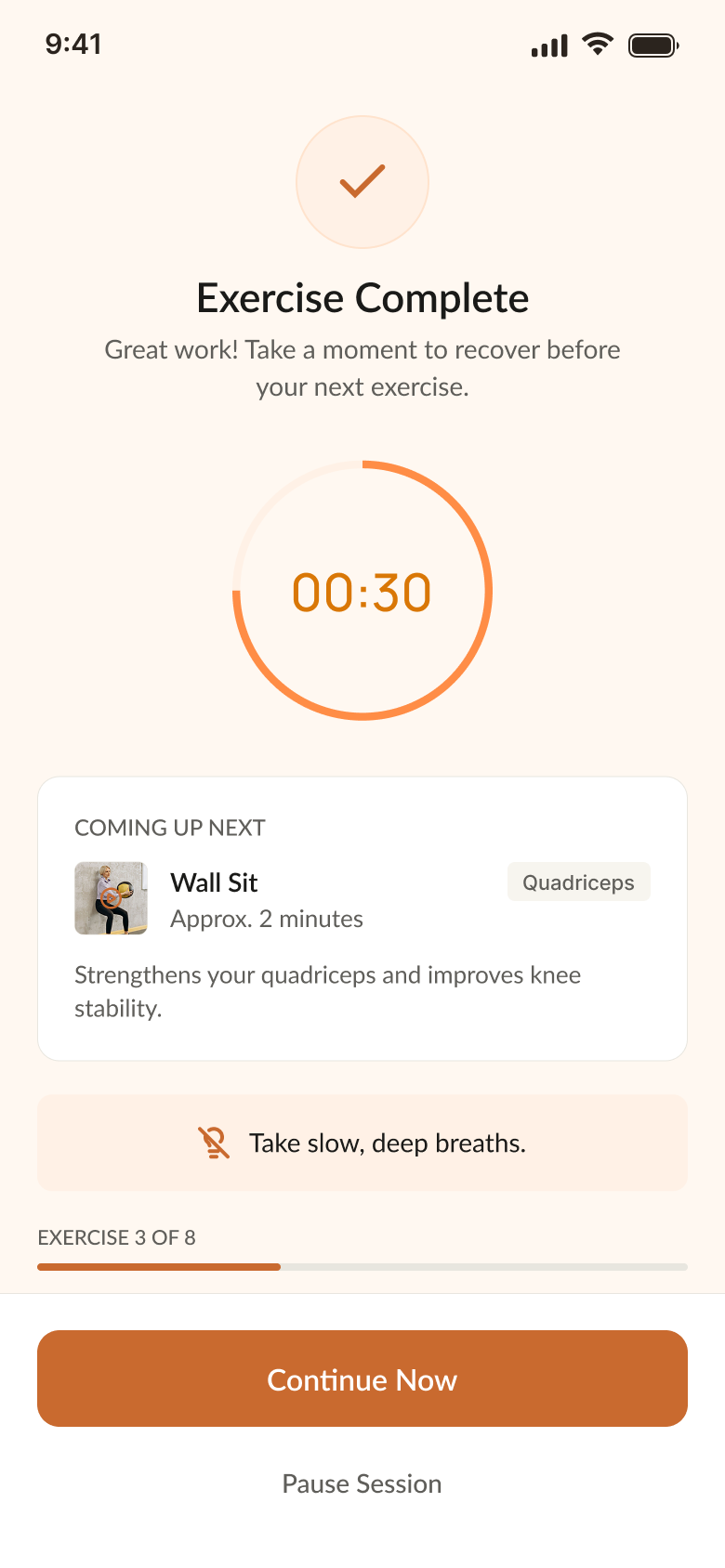
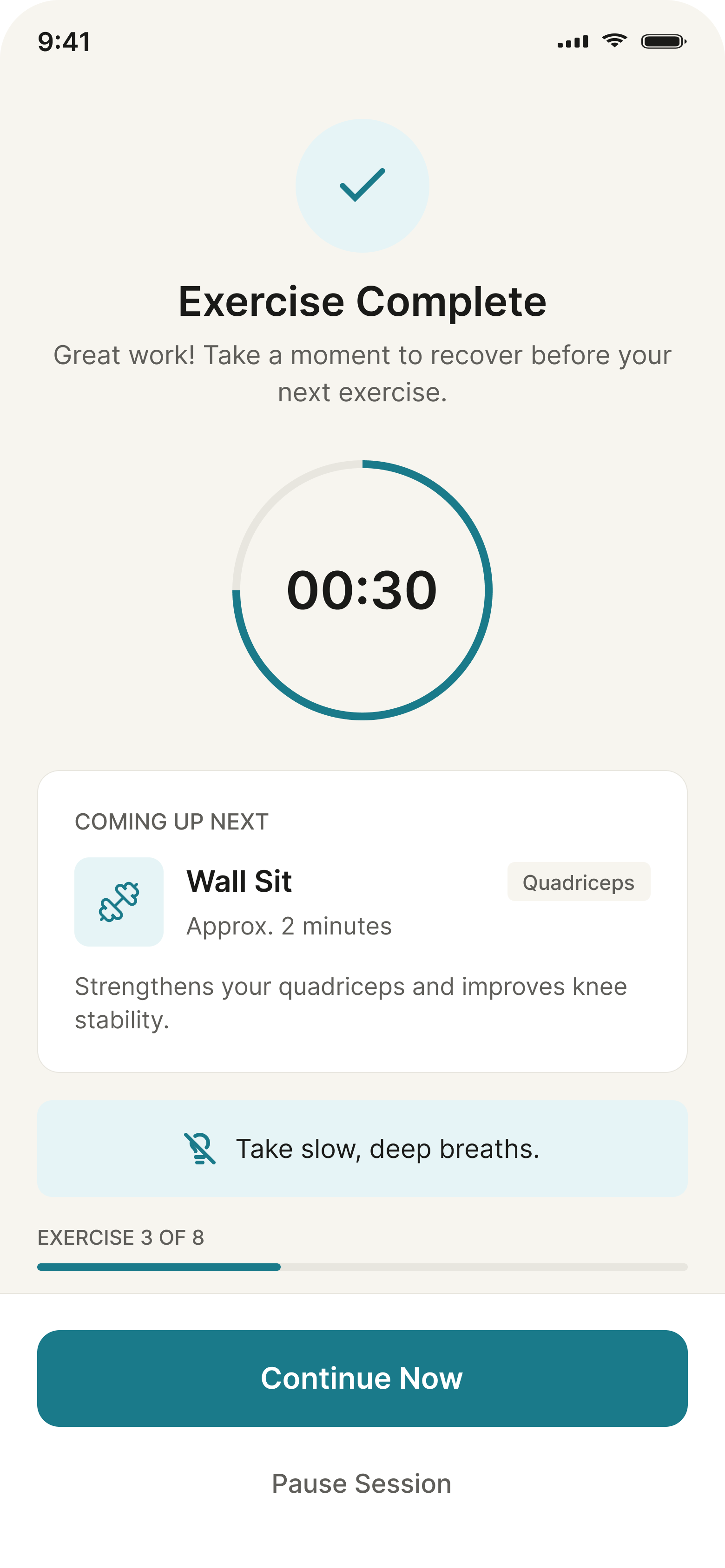
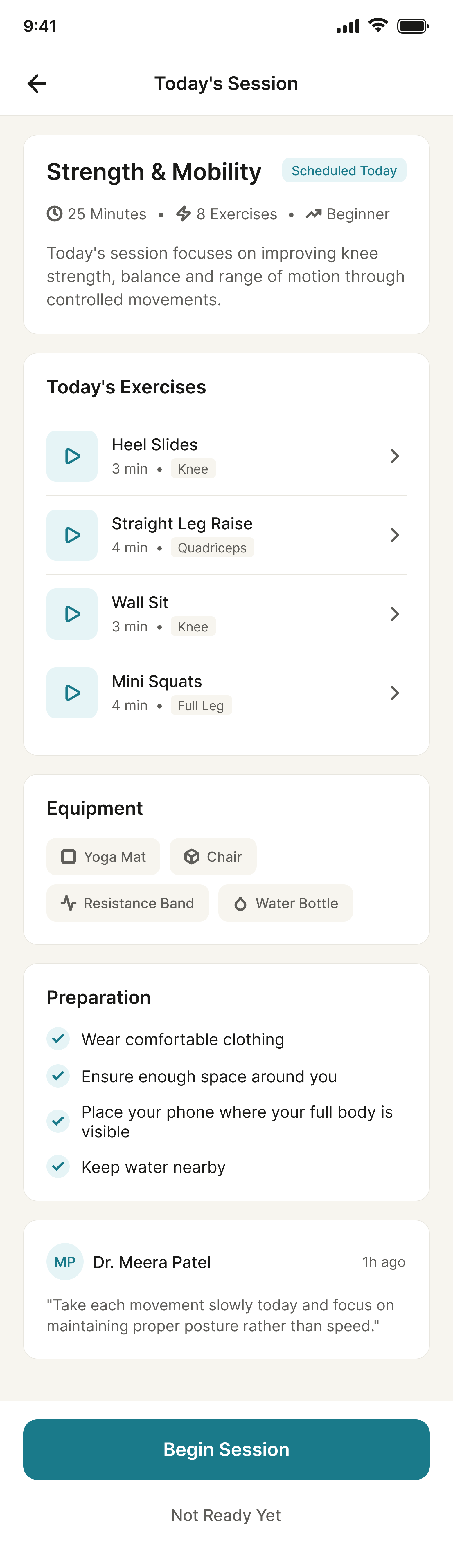
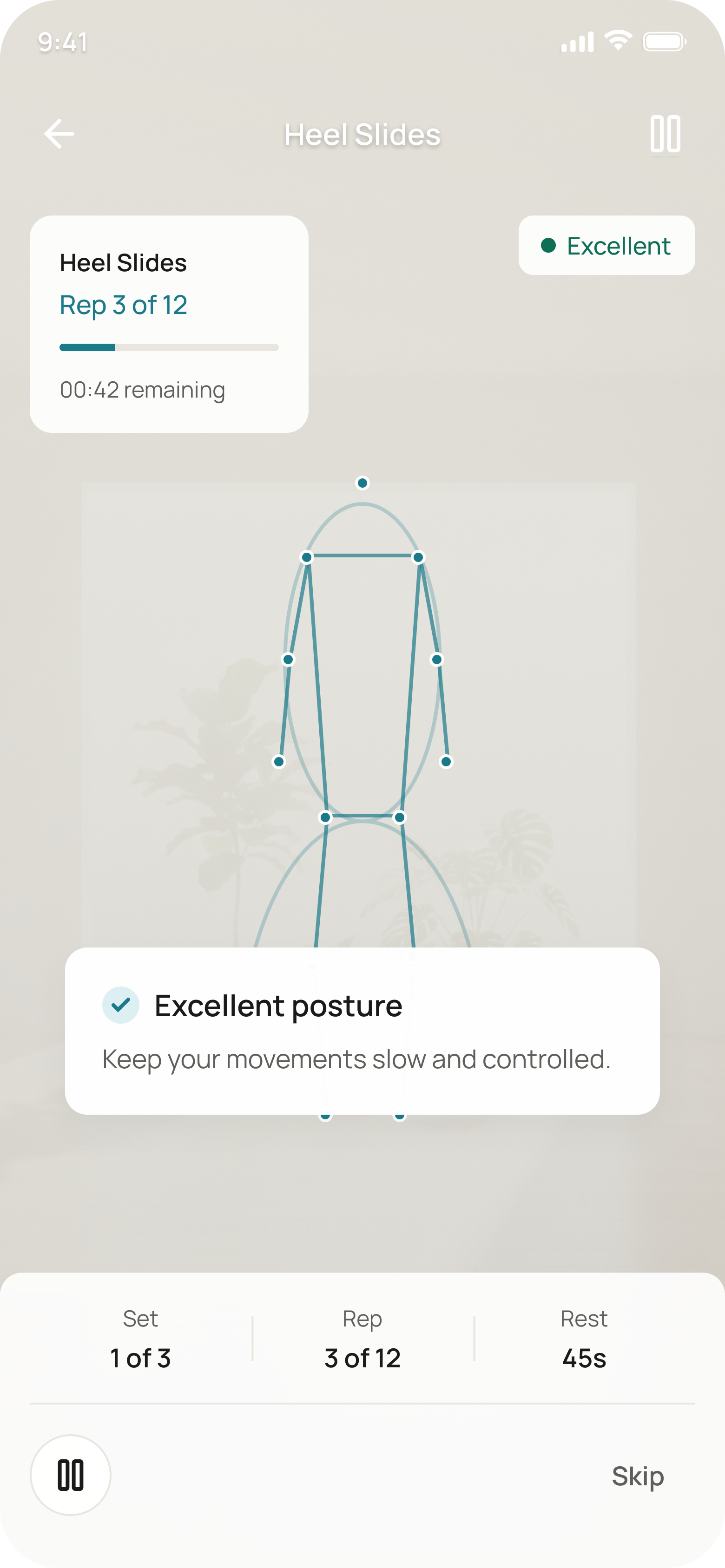
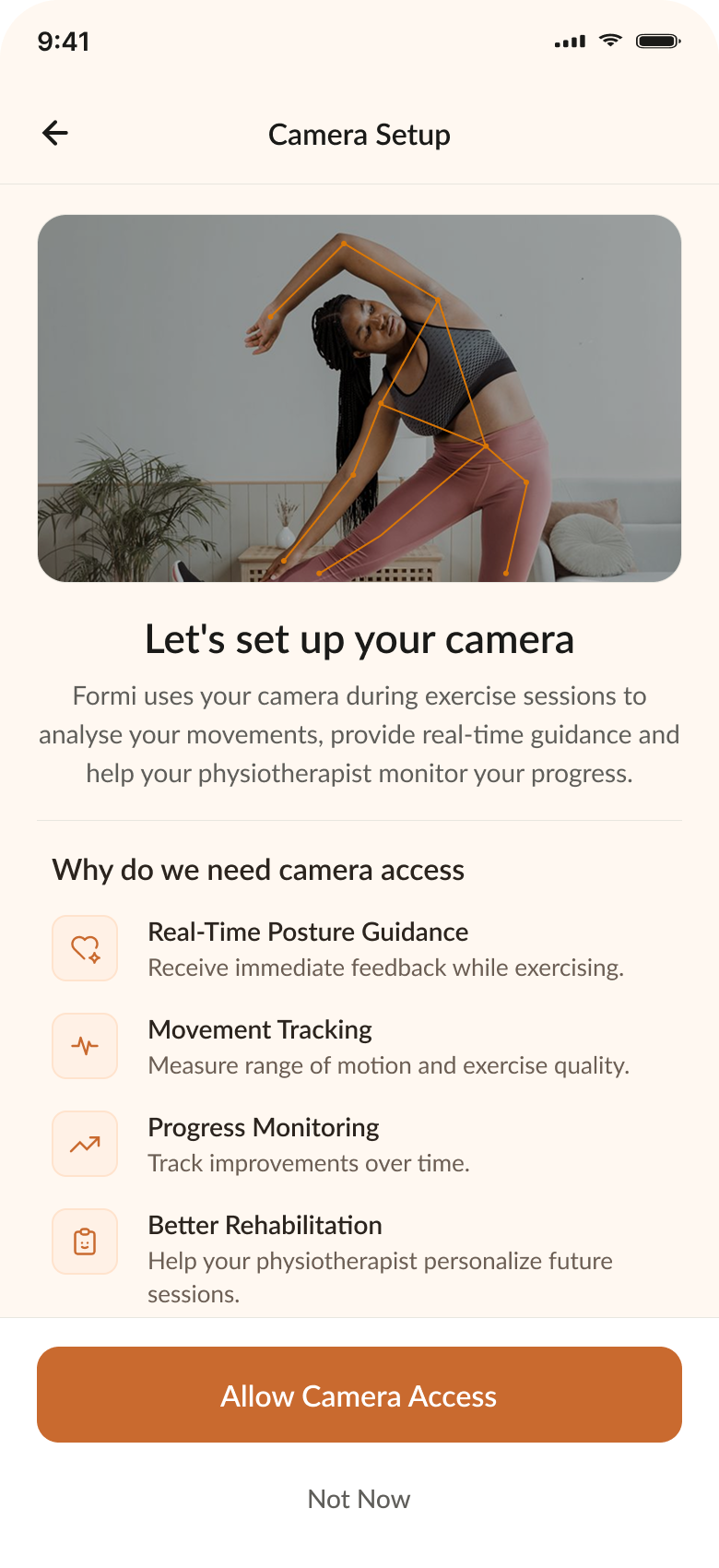
During a session the AI tracks the patient’s pose and coaches them through it live: spoken cues alongside visual ones, so the patient never has to stop mid-movement to read anything.

That dual channel is also what makes the session usable by a caregiver. A family member holding the phone can follow the same cues and correct the patient themselves, which is the only way this works for someone who can’t manage it alone.

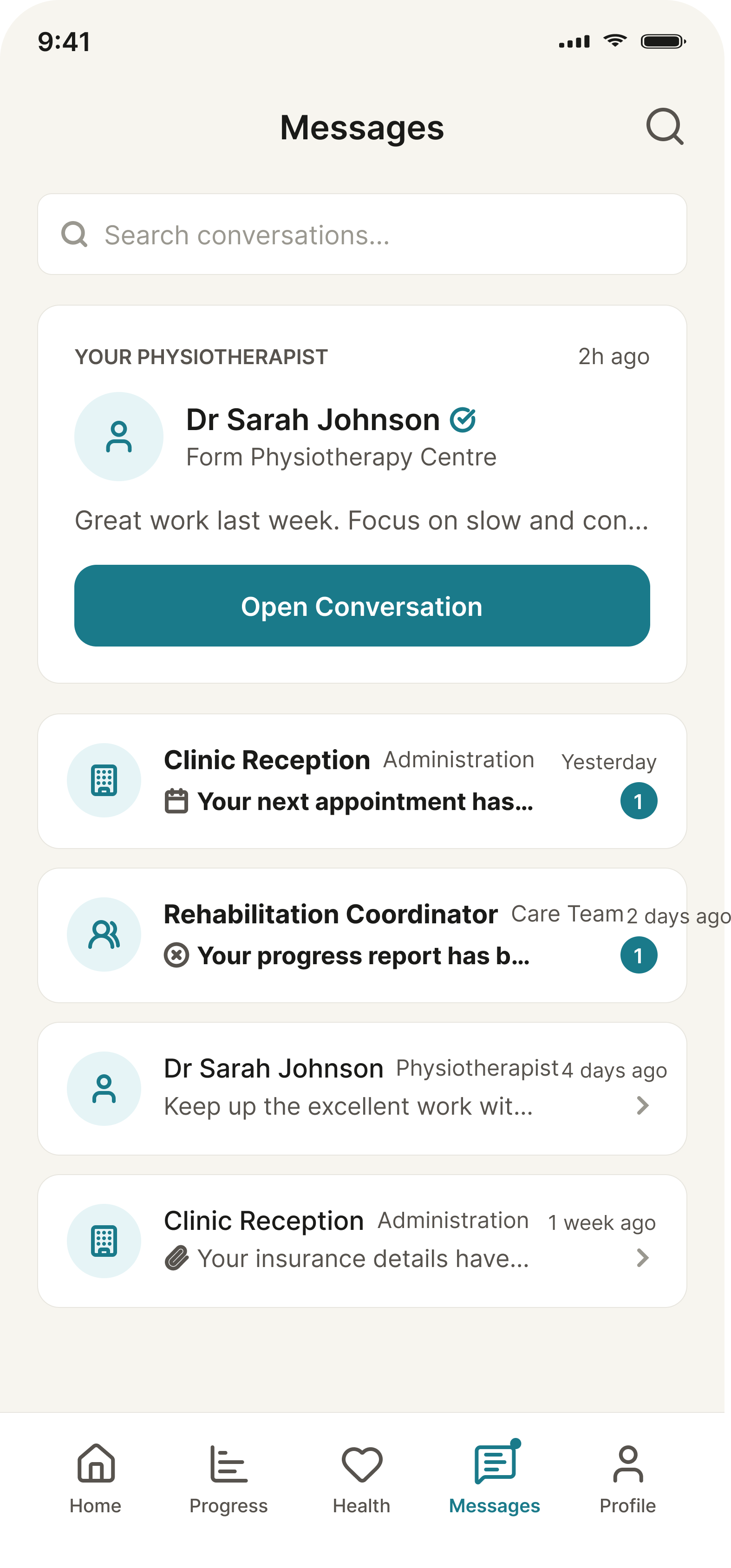
The physiotherapist stays reachable

The physiotherapist stays reachable

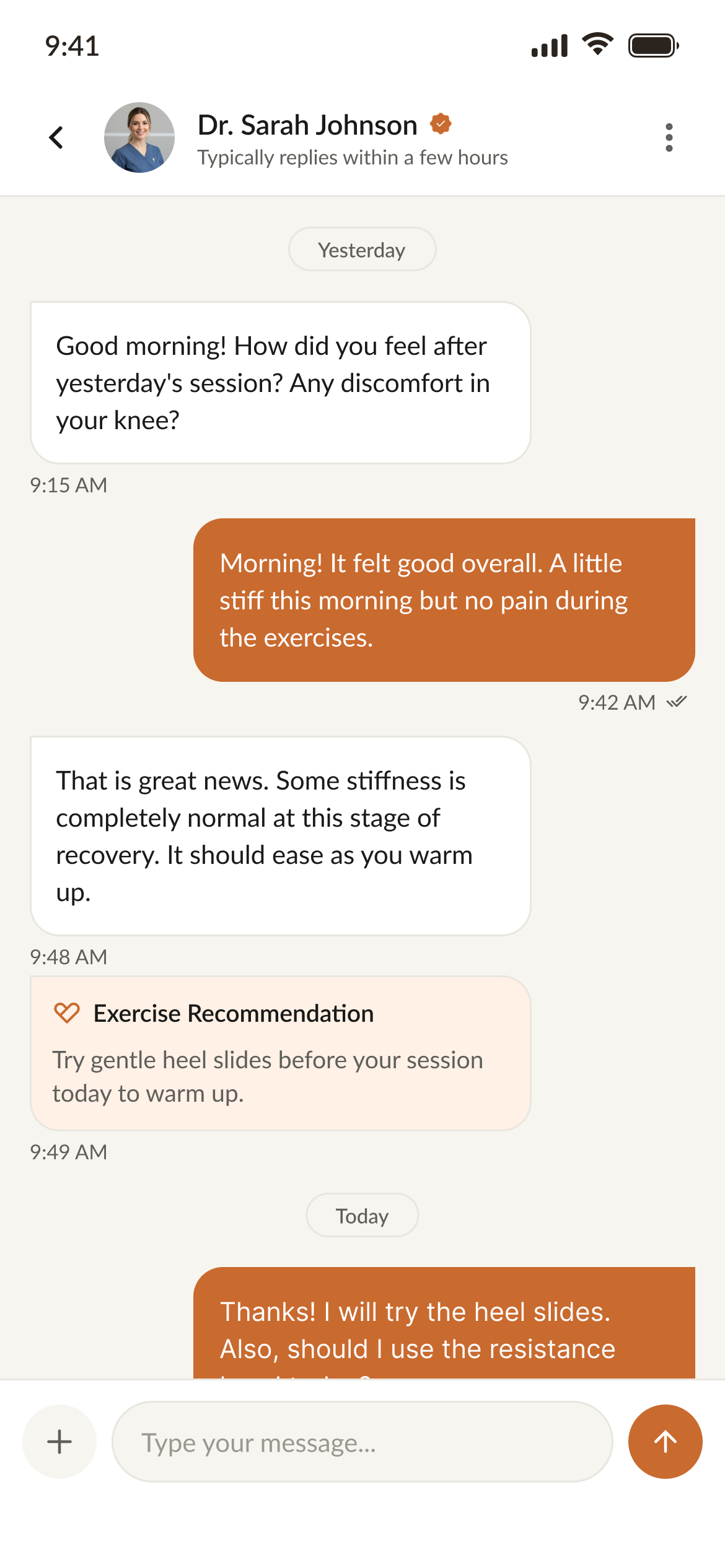
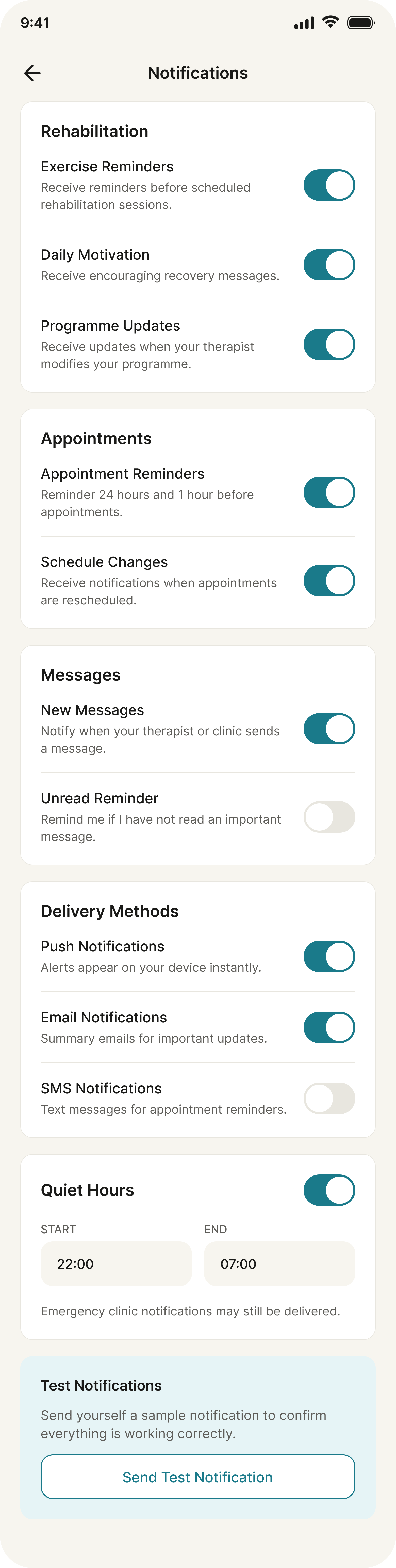
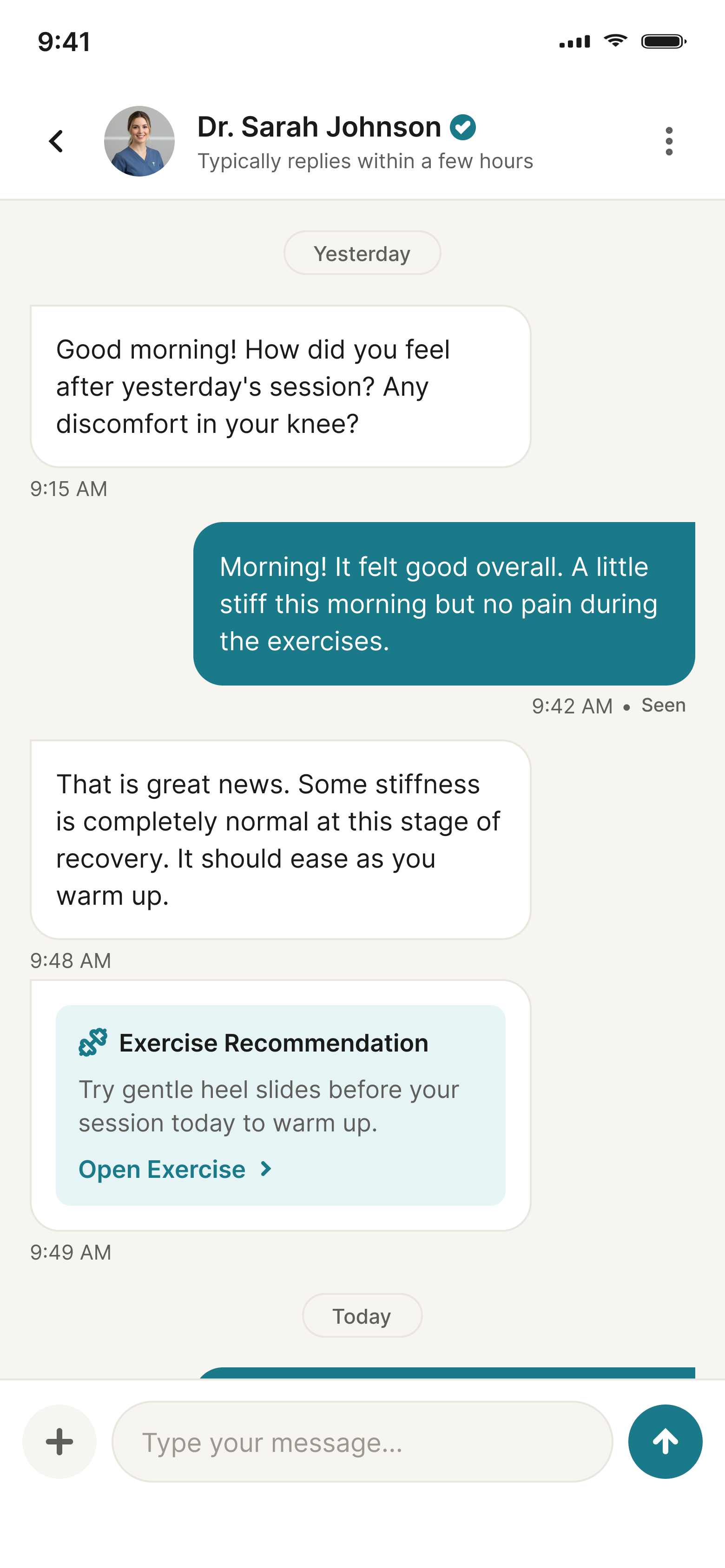
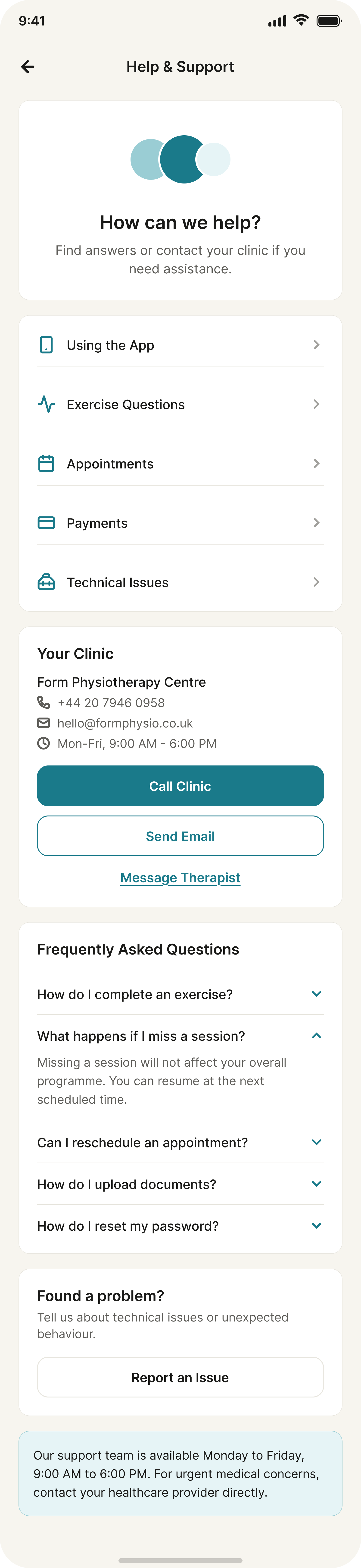
Scheduled check-ins put the physiotherapist in the patient’s week by default rather than on request, so contact isn’t something the patient has to work up to asking for.

Emergencies skip the schedule. A pain spike opens an immediate route to the therapist, messaging or a video call, because the alternative is a frightened patient guessing, or quietly stopping.

Feedback, and proof that it’s working

Feedback, and proof that it’s working

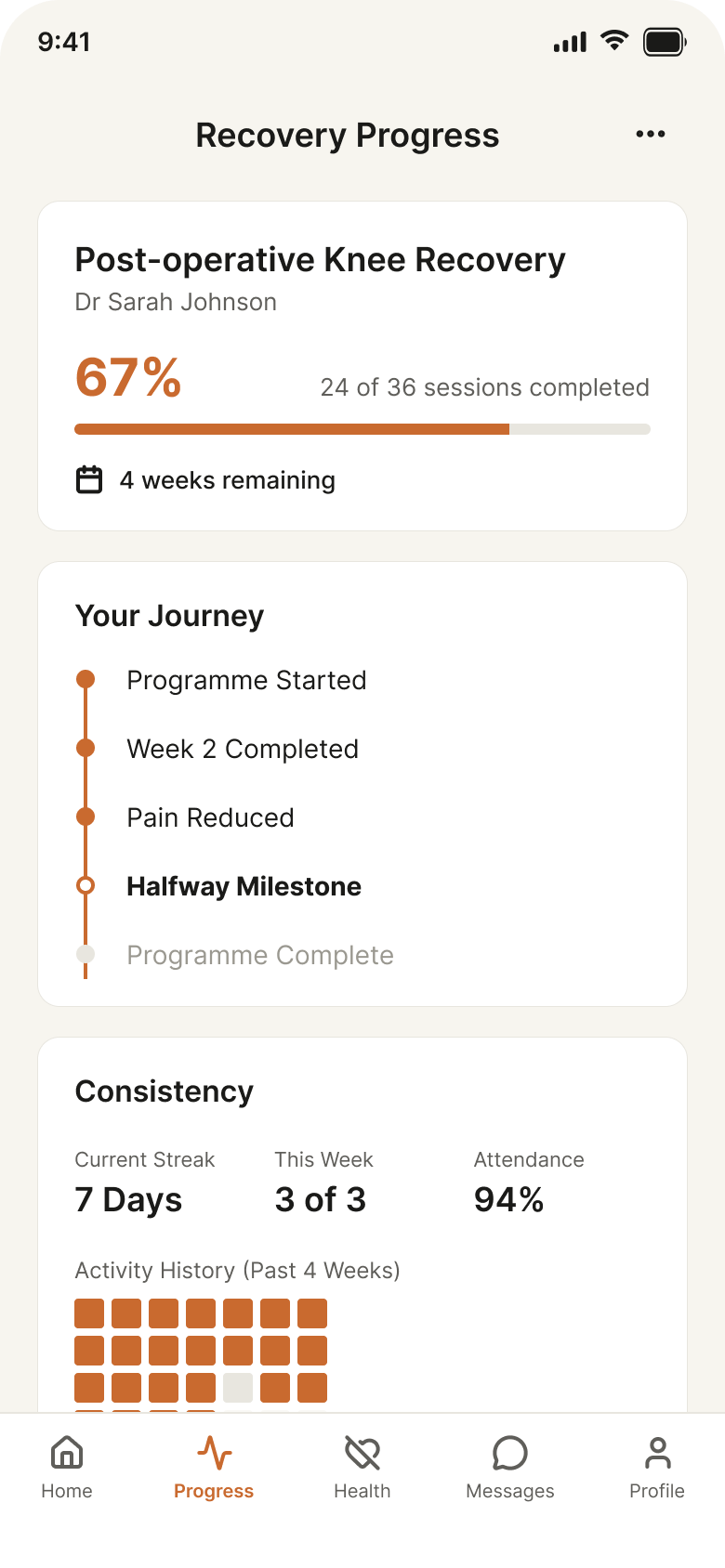
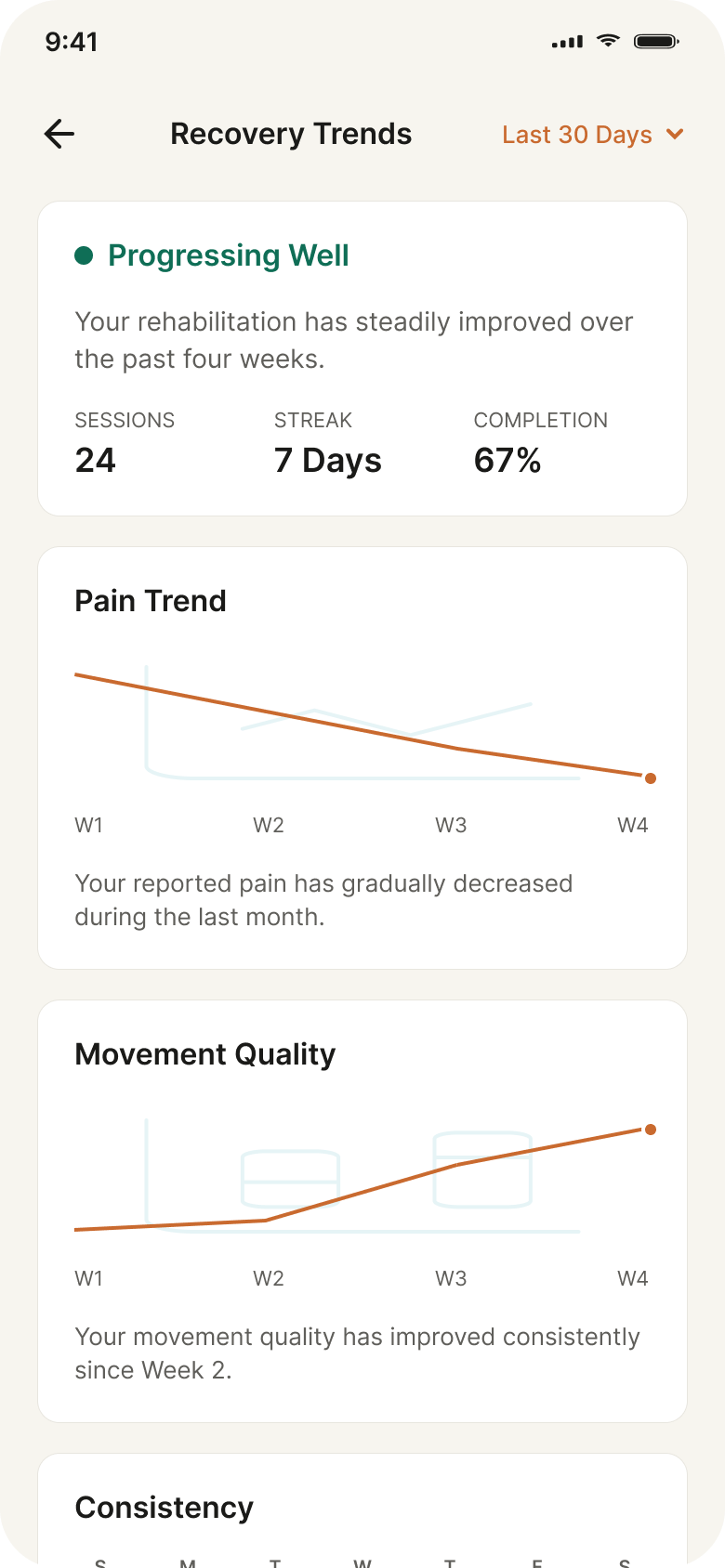
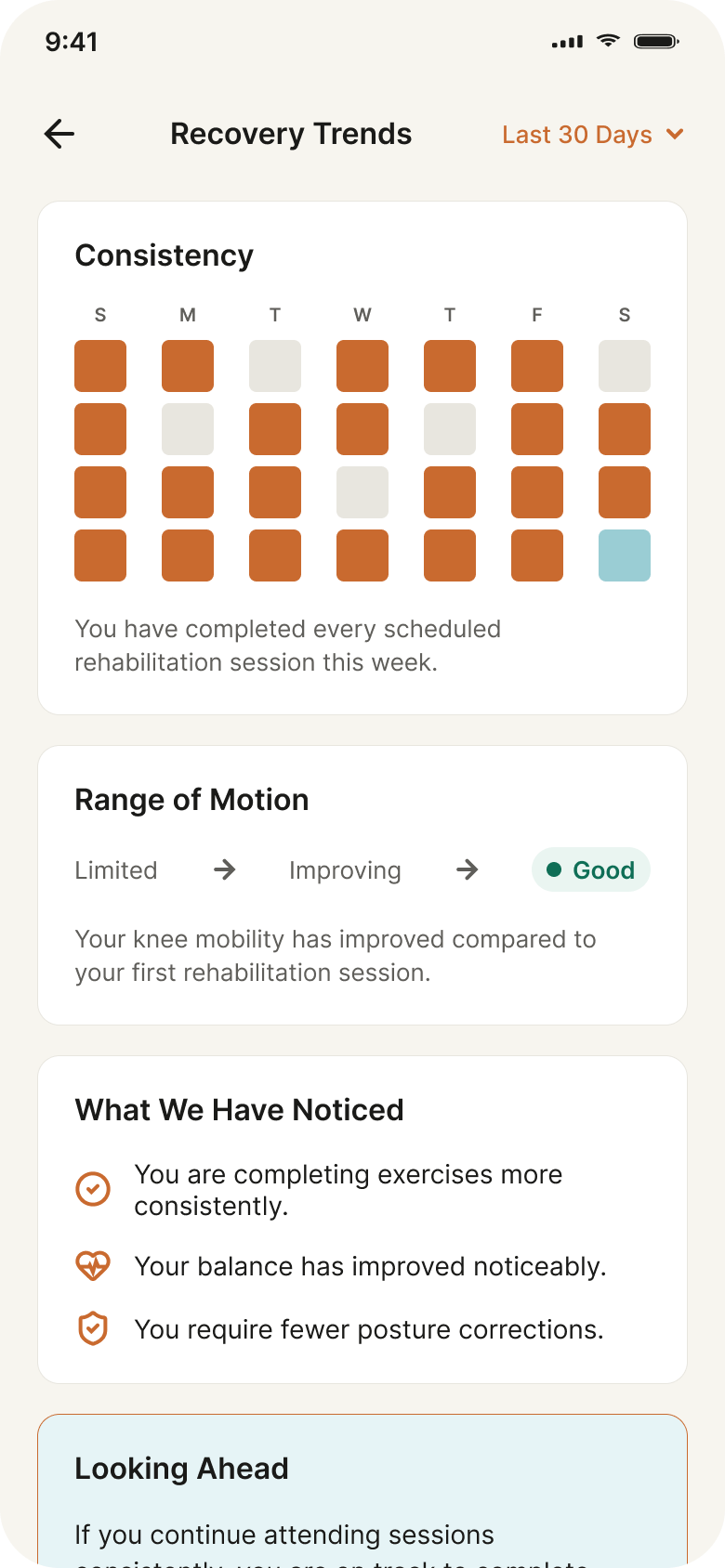
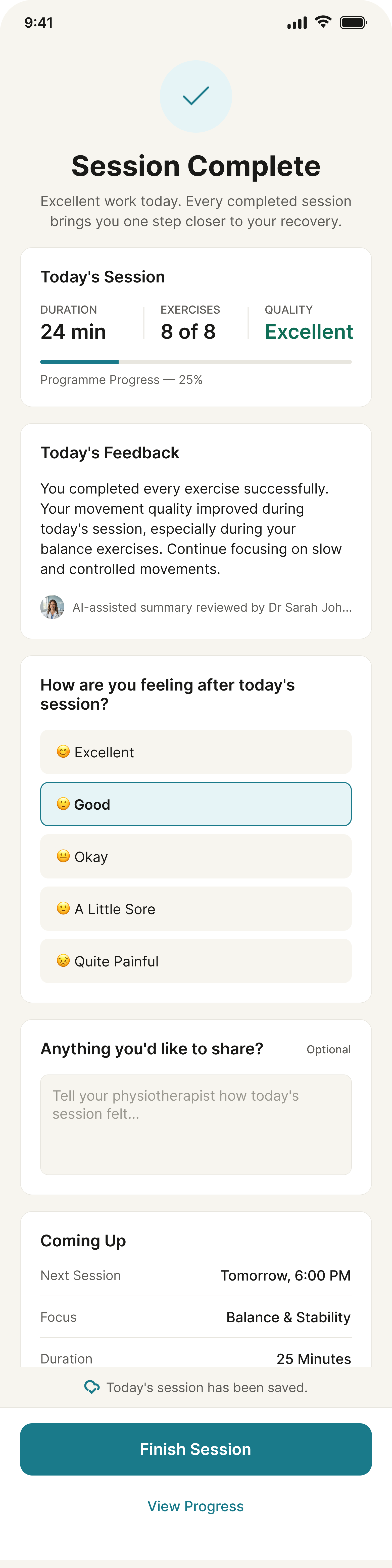
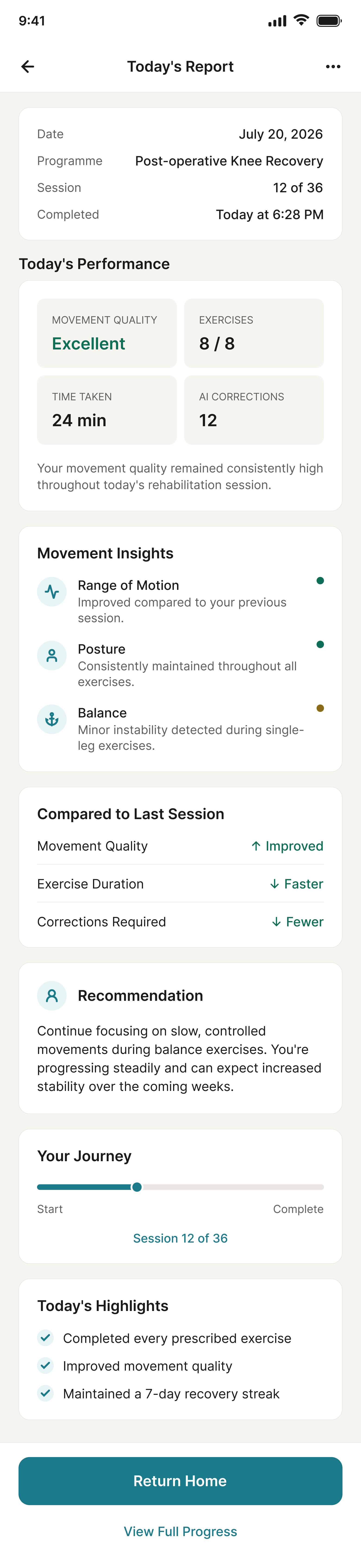
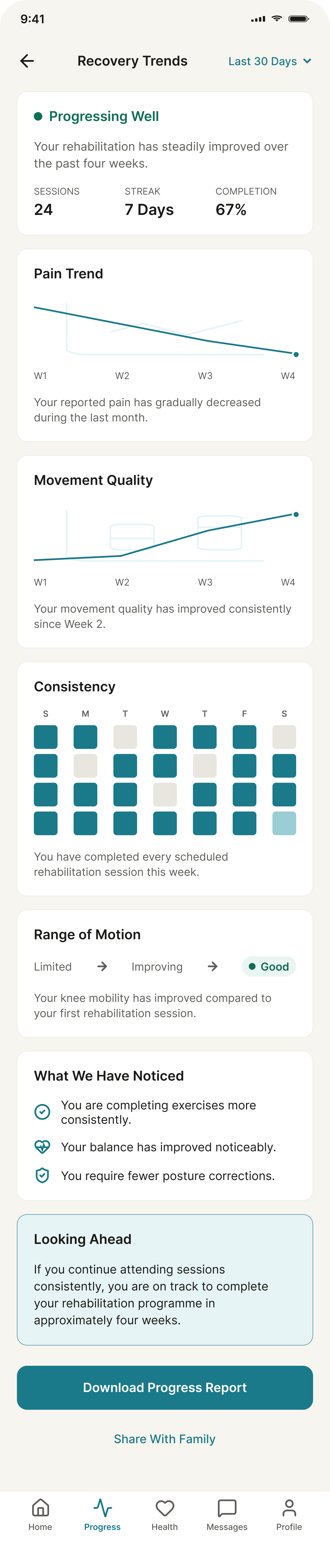
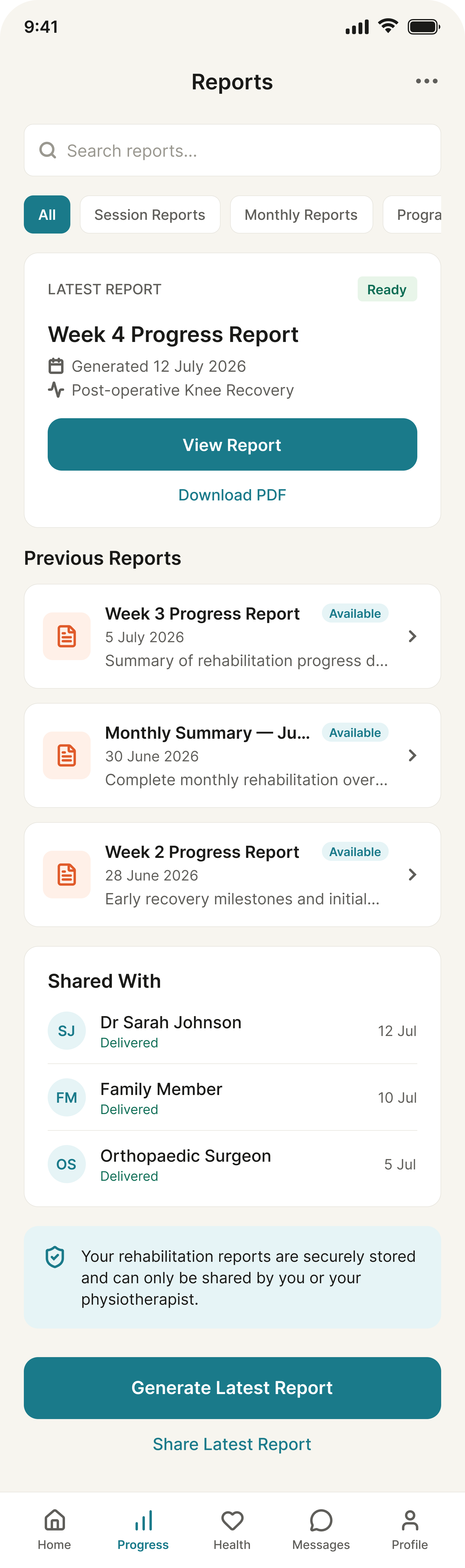
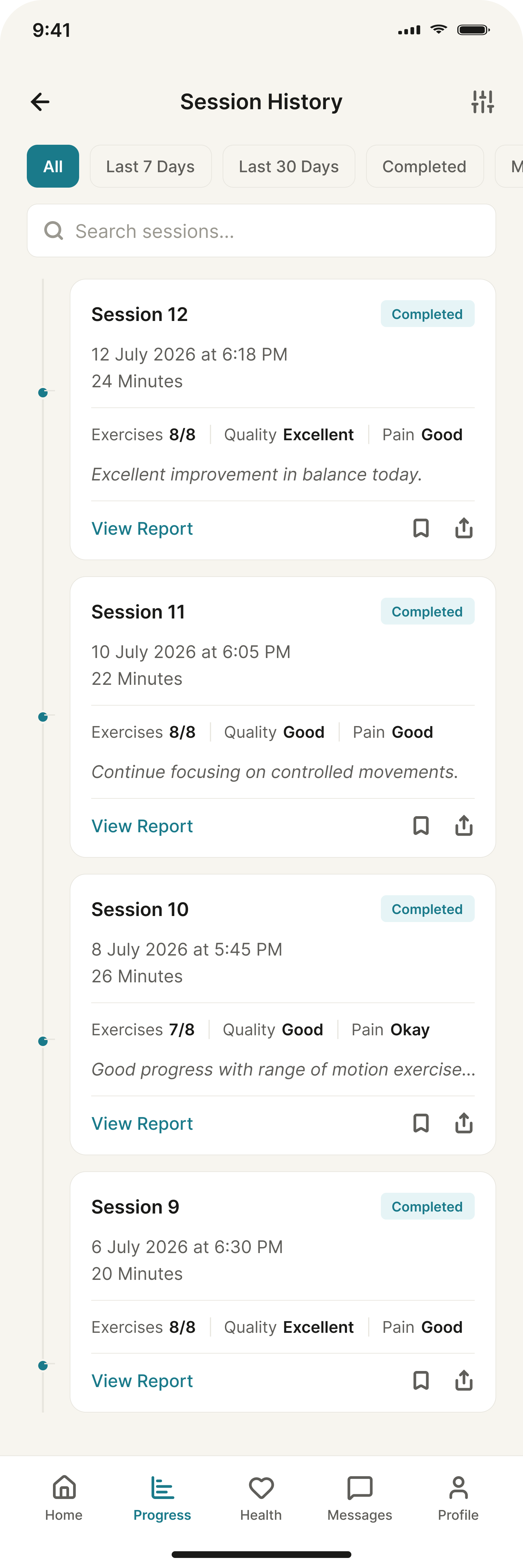
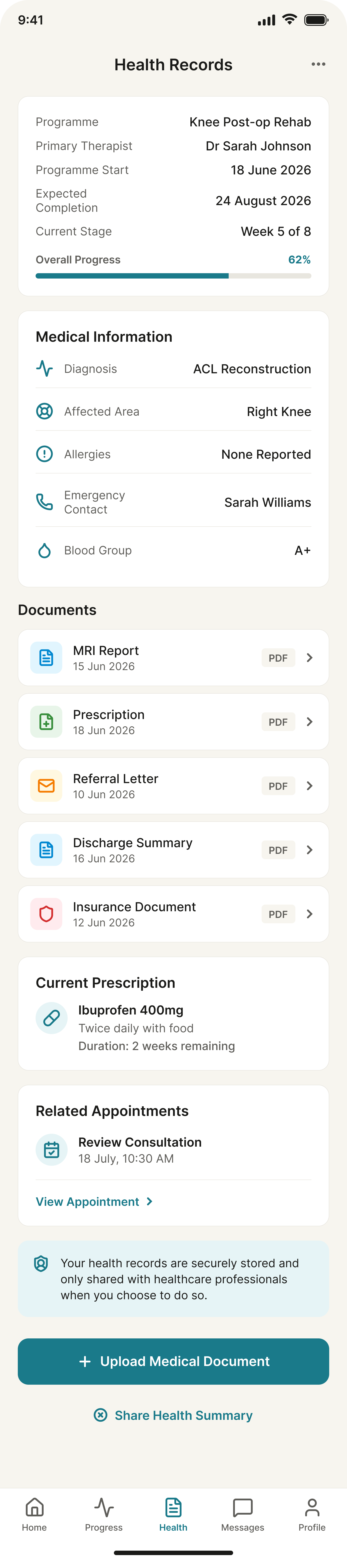
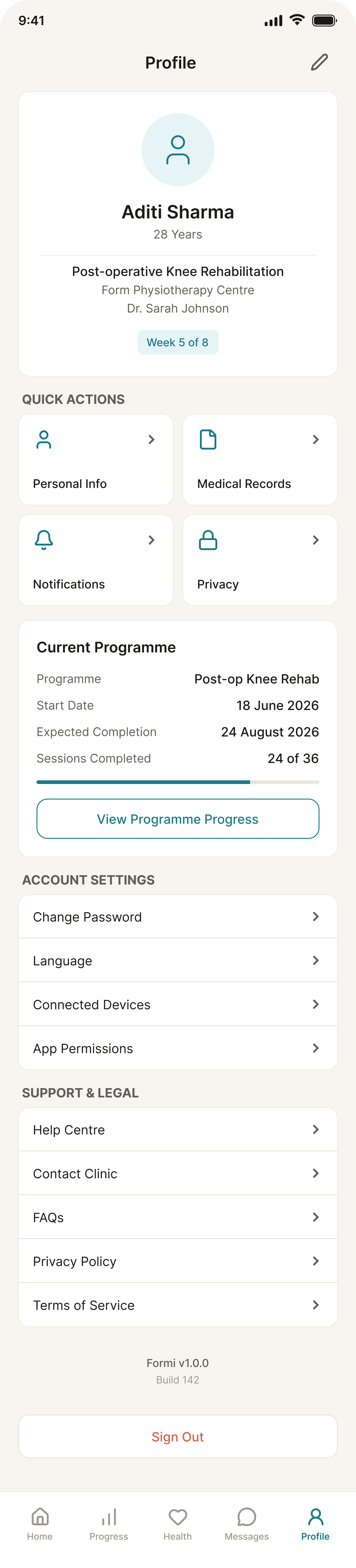
Every session ends with a question the patient can actually answer: what did the pain feel like? That single input drives an AI-written summary, which goes straight to the physiotherapist without the patient having to report anything themselves.

What comes back to the patient is the plain-language version: where they are, what’s improving. For someone recovering alone, seeing the trend move is what makes the next session feel worth doing.

Designing the riskiest surface on reasoning alone

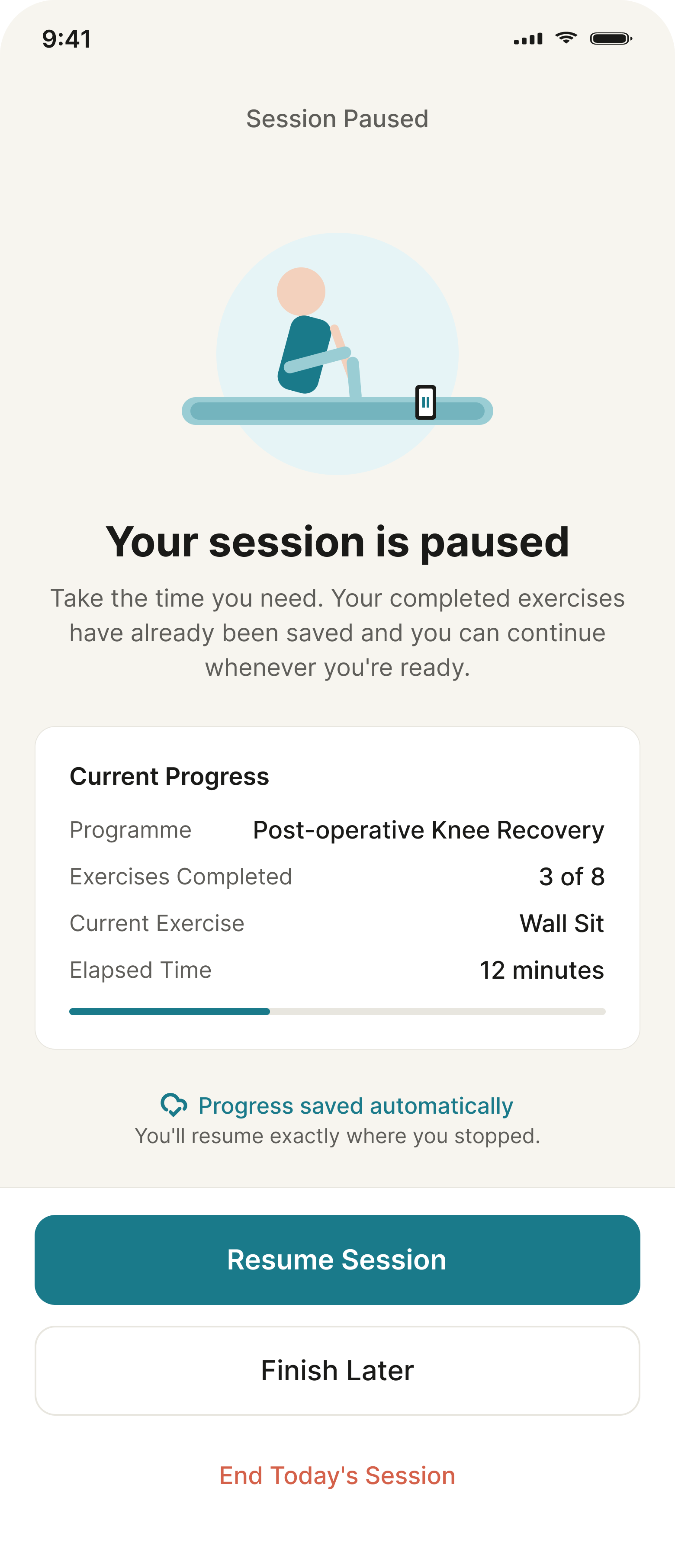
The guided pose-tracking session is the highest-risk surface in the whole platform. It’s the one place where getting the UI wrong could mean a patient performing a rehab exercise incorrectly, unsupervised, with nobody watching.

It was designed without a working prototype in front of real patients. That’s stated here the same way it’s stated on the dashboard case study: the session flow is a considered argument, not a validated one.

What exists, and what it still needs

30
Screens in the patient app
1
Design system shared with the dashboard
2
Native platforms, iOS & Android

Every screen

30 frames
Next projectConqr.ai Like what you see? Let’s talk